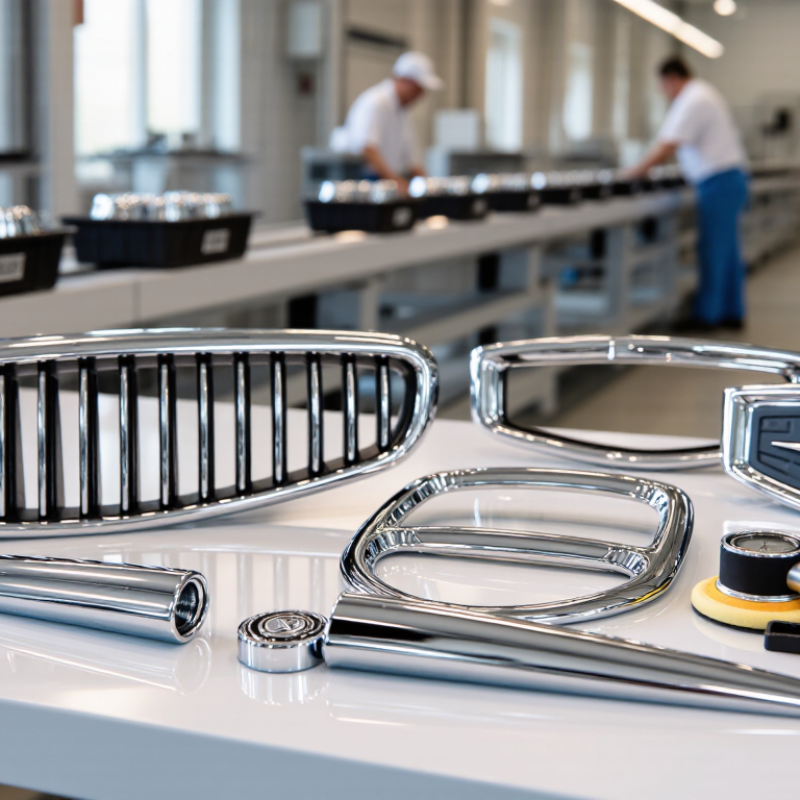
Global automotive buyers often choose auto chrome plating for its balance of appearance, durability, and production flexibility. A well-finished grille, emblem, or interior trim can reflect light evenly without looking excessively bright. That visual detail influences how customers judge an entire vehicle. More importantly, consistent plating can help components resist abrasion, moisture, and everyday handling.
Experienced sourcing teams do not evaluate a supplier from photographs alone. They inspect surface preparation, coating thickness, adhesion, polishing quality, and edge coverage. Sample parts should face practical testing, including thermal cycling, humidity exposure, and salt-spray assessment where relevant. Supplier audits also matter. Review equipment maintenance, process records, worker training, and corrective-action reports. Small details reveal a great deal. A clean production line often supports better consistency.
Global sourcing still requires careful judgment. Different markets may apply different chemical restrictions, labeling rules, and automotive standards. Buyers should confirm destination requirements with qualified compliance professionals before placing orders. Request material declarations, test reports, batch traceability, and clear inspection criteria. Third-party verification can strengthen confidence, but it cannot replace technical communication.
No supplier is perfect. Even a capable factory may face color variation, delayed tooling, or unexpected rejection rates. That reality deserves an honest plan. Define acceptable tolerances, approval samples, packaging controls, and response times before production begins. With transparent documentation and realistic quality checks, auto chrome plating can become more than a decorative choice. It can support dependable global supply, provided buyers continue questioning assumptions and reviewing performance.
Why Choose Auto Chrome Plating for Global Sourcing?
What Is Auto Chrome Plating and How Does It Work?
Auto chrome plating is an electrochemical finishing process for metal components. It improves surface appearance, hardness, and resistance to corrosion. Common parts include grilles, trim pieces, handles, and interior controls. The result is a bright, mirror-like surface.
The process begins with degreasing and cleaning. Any oil, dust, or oxidation can weaken adhesion. Technicians then prepare the base metal through polishing and activation. Copper or nickel layers may follow. These layers help level small surface marks and improve protection. A thin chrome layer is added through an electrical bath. The part is rinsed, dried, and inspected afterward.
Details matter.
For global sourcing, buyers should review coating thickness, surface roughness, color consistency, and adhesion results. Reliable suppliers usually provide inspection records and sample testing. Salt spray tests can reveal weaknesses that visual checks miss. Dimensional checks also matter because plating can affect tight fits.
The process is not flawless. A bright finish can hide poor preparation underneath. Even experienced teams may need to adjust current, bath temperature, or polishing time. I would not approve production from appearance alone. Clear specifications, traceable batches, and pre-shipment inspection create stronger purchasing decisions. This approach reduces rework and helps maintain consistent quality across different production locations.
Why Choose Auto Chrome Plating for Global Sourcing?
Which Benefits Make Auto Chrome Plating Suitable for Global Sourcing?
Auto chrome plating supports global sourcing through durability, visual consistency, and measurable specifications. OICA reported 93.5 million motor vehicles produced worldwide in 2023. That scale increases demand for repeatable surface finishing across multiple suppliers. Chrome-plated parts resist wear, moisture, and frequent handling. They also provide a bright, uniform appearance for visible automotive components. In practice, buyers can compare thickness, adhesion, hardness, and corrosion performance using ISO 1456 or ASTM B456 requirements.
The process can simplify international procurement. Standardized inspection reports help factories communicate across languages and regions. Digital color references, cross-section testing, and salt-spray records reduce avoidable disputes. The IEA’s Global EV Outlook 2024 recorded more than 14 million electric car sales in 2023. This transition still requires reliable finishing for trims, controls, and interior hardware. However, chrome plating is not automatically the best choice. Geometry, base material, production volume, and local chemical regulations can change the decision. That part is easy to underestimate.
Tips: Request a trial batch before approving mass production. Specify coating thickness and acceptable appearance limits. Ask for test records, process controls, and material declarations. Confirm whether the supplier uses a compliant trivalent process where required. A low quotation may hide rework, packaging damage, or inconsistent brightness. Review the complete landed cost.
Why Choose Auto Chrome Plating for Global Sourcing?
How to Evaluate Auto Chrome Plating Suppliers Worldwide?
Choosing an auto chrome plating supplier requires more than comparing prices. A bright surface may look impressive, yet performance depends on preparation, coating thickness, and process control. Ask how the supplier cleans substrates, manages bath chemistry, and checks adhesion. Request recent inspection records, not only promotional photographs.
Evaluate production capability through physical samples. Inspect edges, recesses, mounting points, and visible surfaces under strong light. Measure coating thickness at several locations. Salt spray testing can reveal corrosion resistance, while thermal cycling may expose cracking or peeling. Confirm whether the supplier can repeat these results across different production batches.
Experience matters during difficult projects. Ask for examples involving similar metals, part shapes, and expected volumes. A reliable supplier should explain tolerance limits, rejection procedures, packaging methods, and shipment protection. Factory visits or independent audits can verify equipment, worker training, and traceability. Check certifications carefully, and confirm they match the actual facility.
Communication is another practical test. Send a detailed drawing and observe the response. Do they identify risks, or simply promise perfection? A polished sample can hide weak adhesion. No audit is perfect. I would also compare pilot-run results with mass-production data, because small batches often receive extra attention. Clear records, realistic lead times, and responsive technical support reduce sourcing risks across borders.
Auto chrome plating can support global sourcing when buyers control quality before shipment. The finish must match the part’s function, not only its appearance. Ask suppliers to document the substrate, nickel layer, chrome layer, and specified thickness. ISO 9001-based process control is useful, but certification alone does not prove plating quality.
Require measurable tests. Coating thickness should be checked at several locations, especially edges, corners, and recessed areas. X-ray fluorescence can verify metal layers without damaging parts. Adhesion testing should follow a recognized method, such as ASTM B571, when suitable. For corrosion resistance, request salt spray testing under ASTM B117 or ISO 9227 conditions. Define exposure hours in advance. Hard chrome parts may also need microhardness and wear testing. Surface roughness, gloss, pits, blisters, and color variation deserve clear acceptance limits.
Tips: Approve a golden sample and a written inspection plan before mass production. Photograph test points. Request raw test data, not only pass statements. A polished sample can still hide weak adhesion. I have seen buyers focus on mirror finish while ignoring thin coverage near holes. That mistake becomes expensive after assembly. Also confirm sampling levels, gauge calibration, and corrective-action procedures. No single test proves everything. Some buyers may require more practical cycling tests because laboratory corrosion results do not perfectly represent road moisture, cleaning chemicals, or stone impact.
Buyer-defined qualification targets for corrosion resistance, environmental durability, adhesion, and dimensional control
A robust automotive chrome-plating qualification plan should combine salt-spray testing under ASTM B117 or ISO 9227, cyclic-corrosion testing such as SAE J2334, humidity exposure under ISO 6270-2, UV durability under ISO 4892-3, adhesion testing under ISO 2409 or ASTM D3359, and dimensional verification with calibrated gauges. The 240-hour salt-spray, 240-hour humidity, 1,000-hour UV, 30-cycle cyclic-corrosion, and 10-cycle thermal-cycling values shown here are practical example targets for supplier comparison, not universal pass/fail limits. Buyers should define acceptance criteria, coating thickness, sample quantity, substrate condition, and inspection method in the purchase specification.
Why Choose Auto Chrome Plating for Global Sourcing?
What Risks Should Global Buyers Consider Before Purchasing?
Auto chrome plating can improve surface hardness, corrosion resistance, and visual appeal. However, a bright sample does not guarantee consistent production. In factory assessments, I have seen attractive parts fail after repeated cleaning, vibration, or temperature changes. Small defects matter.
Buyers should verify the base material before approving a quotation. Steel, aluminum, and zinc alloys require different preparation methods. Poor cleaning can cause peeling, pinholes, or uneven color. Request coating-thickness records, adhesion results, and corrosion-test conditions. A salt-spray result means little without test duration and sample details. Inspect hidden edges, mounting points, and drilled holes. These areas often reveal weak process control.
Compliance creates another sourcing risk. Ask for chemical declarations, waste-treatment records, and evidence that the process follows destination-market requirements. Do not rely on verbal promises. Documentation should match the actual factory, not only a trading office. Packaging also deserves attention. Foam separators, dry wrapping, and moisture protection can prevent scratches and oxidation during long transport. Costs may increase unexpectedly through rework, inspection, tooling, or port delays.
A pilot order is safer than a large commitment. Use approved drawings and measurable acceptance limits. Keep retained samples for comparison. Even careful audits have gaps. I once underestimated packaging damage because the inspection ended before shipment. That mistake was avoidable. Local communication, traceability, and realistic lead times deserve equal attention. The cheapest quotation may not be the lowest total cost.
| Sourcing Dimension | Typical Technical Reference | Potential Buyer Risk | Risk Level | Recommended Verification Before Purchase |
|---|---|---|---|---|
| Appearance and Finish | Bright, uniform reflective surface with consistent color, gloss, and texture across the visible area. | Color variation, haze, orange peel, pits, scratches, burns, or visible plating lines may affect vehicle appearance and customer acceptance. | Medium | Approve a signed master sample, define the inspection lighting and viewing distance, and specify acceptable limits for cosmetic defects. |
| Substrate Compatibility | Common substrates include steel, stainless steel, aluminum, zinc alloys, and engineering plastics. Each requires a compatible pretreatment and strike layer. | Poor adhesion, blistering, peeling, or substrate corrosion can occur when the cleaning, etching, activation, or intermediate layer is unsuitable. | High | Require substrate identification, pretreatment details, adhesion testing, cross-section review, and sample validation using the actual production material. |
| Layer Structure | Decorative automotive chrome commonly uses a multilayer system such as copper, nickel, and a thin chromium top layer. Hard chrome uses a substantially thicker chromium deposit for wear resistance. | A supplier may quote the same “chrome plating” term for different layer structures, causing differences in corrosion resistance, appearance, and service life. | High | Place the layer sequence, plating chemistry, minimum thickness, and measurement method directly on the purchase specification. |
| Coating Thickness | Decorative nickel layers are often specified in the approximate range of 10–30 micrometres, while decorative chromium is commonly much thinner, often below 1 micrometre. Actual values depend on design and performance requirements. | Insufficient thickness may reduce corrosion protection and durability; excessive thickness may affect dimensions, fit, edges, and assembly. | High | Set minimum local and average thickness values, define sampling locations, and verify with X-ray fluorescence, cross-section microscopy, or another agreed method. |
| Corrosion Resistance | Salt-spray requirements vary widely by component location, substrate, coating system, and customer specification. Common qualification levels may range from approximately 96 to 500 or more hours. | A test-hour value alone may not predict field performance, especially when the part has sharp edges, cavities, complex geometry, or galvanic contact with other metals. | High | Define the test method, exposure duration, failure criteria, scribe requirements, and inspection interval. Use production-intent samples rather than only laboratory coupons. |
| Adhesion and Durability | Coatings should remain bonded after thermal cycling, humidity exposure, vibration, handling, and assembly loads appropriate to the component. | Delayed peeling or cracking may appear after shipment or vehicle assembly even when the initial appearance is acceptable. | High | Request adhesion testing, thermal-cycle testing, humidity exposure, and application-specific durability testing with documented pass/fail criteria. |
| Dimensional Control | Plating adds material to functional surfaces and can affect holes, threads, clips, snap-fits, mating surfaces, and edge geometry. | Parts may fail to assemble, create excessive friction, or require rework if masking and dimensional compensation are not controlled. | High | Provide critical dimensions and masking zones on drawings. Inspect pre-plating and post-plating dimensions using calibrated gauges or coordinate measurement equipment. |
| Chemical and Regulatory Compliance | Automotive plating may involve substances regulated by chemical, worker-safety, wastewater, and product-material rules. Hexavalent chromium processes receive particular regulatory attention. | Non-compliant chemistry, incomplete declarations, or uncontrolled wastewater can create import delays, legal exposure, customer rejection, and forced process changes. | High | Request current material declarations, restricted-substance documentation, process-chemical disclosures, wastewater permits where applicable, and evidence of compliance for the destination market. |
| Environmental and Wastewater Controls | Plating operations generate rinse water, sludge, spent chemicals, and potentially hazardous waste that require controlled treatment and disposal. | Environmental incidents or weak waste controls can interrupt production and create reputational or supply-chain liability for the buyer. | High | Conduct a supplier environmental assessment and review wastewater treatment records, waste manifests, emergency procedures, and relevant audit findings. |
| Quality Consistency | Performance depends on bath chemistry, current density, temperature, filtration, pretreatment, rack positioning, and process-control discipline. | Lot-to-lot variation may produce inconsistent color, thickness, gloss, corrosion performance, or adhesion. | High | Request process-control plans, bath analysis frequency, calibration records, control charts, first-article results, and lot traceability from raw part to shipment. |
| Defect and Acceptance Criteria | There is no universal acceptable defect rate for every automotive chrome-plated part; the target must be based on part visibility, function, customer standards, and inspection severity. | Undefined acceptance criteria can lead to disputes, high sorting costs, and inconsistent decisions between the supplier and buyer. | Medium | Use an approved limit sample, defect classification table, AQL or agreed inspection plan, and clear rules for rework, replacement, and chargebacks. |
| Production Capacity | Effective capacity depends on tank size, rack density, cycle time, pretreatment bottlenecks, maintenance schedules, and available backup lines. | A supplier may meet prototype demand but fail to support peak production volumes or emergency replenishment. | Medium | Validate monthly capacity, peak-load capacity, equipment utilization, backup arrangements, planned maintenance, and capacity-allocation commitments in the contract. |
| Lead Time and Logistics | Total lead time includes raw-part preparation, plating, inspection, packing, export documentation, international transport, customs clearance, and local delivery. | Long transport routes, customs holds, hazardous-chemical restrictions, or port disruption can increase inventory shortages and production downtime. | Medium | Agree on production and shipping milestones, maintain safety stock for critical parts, define Incoterms, and prepare an alternative transport or routing plan. |
| Packaging and Handling | Finished chrome surfaces require separation, clean handling, protective film or sleeves where appropriate, and packaging that prevents rubbing and moisture accumulation. | Post-plating scratches, fingerprints, corrosion stains, and contact marks may occur during packing or long-distance transport. | Medium | Approve packaging samples, specify contact materials, require dry and clean packing conditions, and perform transport simulation or drop testing for sensitive parts. |
| Total Landed Cost | Purchase price is only one element; tooling, racks, masking, testing, packaging, freight, duties, inspection, rejects, and rework also affect total cost. | A low unit price can become uneconomical when defect sorting, expedited freight, tooling changes, or compliance documentation are added. | Medium | Compare suppliers using a total-landed-cost model and include tooling ownership, testing charges, quality-failure costs, freight assumptions, and currency exposure. |
| Change Management | Changes to substrate, pretreatment, chemicals, plating line, location, tooling, or subcontractors can alter coating performance. | Unreported process changes may invalidate previous qualification results and create unexplained field failures. | High | Include a formal prior-approval requirement for material, process, equipment, location, and subcontractor changes, followed by requalification when necessary. |
| Supplier Continuity | Supply resilience depends on qualified backup capacity, chemical availability, equipment maintenance, skilled operators, and financial stability. | Localized outages, regulatory shutdowns, chemical shortages, or labor disruption can stop deliveries when no qualified alternative exists. | Medium | Assess business-continuity plans, critical chemical sources, backup equipment, recovery time, inventory policy, and the feasibility of dual sourcing. |
| Pre-Shipment Release | Release decisions should combine appearance inspection, dimensional results, thickness data, adhesion or corrosion results, quantity verification, and traceability. | Shipping based only on visual inspection may allow hidden thickness, adhesion, or chemical-compliance problems to reach the destination. | High | Use a documented inspection and test plan, require a certificate of conformity, retain production records, and conduct independent pre-shipment inspection for critical parts. |
Note: The technical ranges shown are general industry reference values rather than universal acceptance limits. Final requirements should be confirmed through engineering drawings, customer specifications, applicable standards, service conditions, and production-part validation.