Choosing among the types of chrome plating requires more than comparing surface appearance. The correct finish depends on wear, corrosion exposure, dimensional tolerance, substrate material, and maintenance conditions. A bright bumper finish cannot serve every industrial purpose. Hard chrome suits sliding shafts and hydraulic components, while decorative chrome prioritizes appearance and moderate protection. Trivalent chrome may support lower-impact production goals, but its color and process behavior can differ from traditional hexavalent systems.
Market evidence shows why this decision matters. Grand View Research’s 2024 Electroplating Market Size, Share & Trends Analysis Report identifies automotive, aerospace, electronics, and machinery as major demand sectors. These sectors require different combinations of hardness, thickness, adhesion, and surface consistency. The U.S. Environmental Protection Agency also maintains specific emission standards for chromium electroplating and anodizing facilities. Compliance affects process selection, equipment design, and supplier qualification.
Milan Paunovic, a leading electroplating researcher and co-editor of Modern Electroplating, defines the core process clearly: “Electroplating is the deposition of a metal coating on an object by passing an electric current through an electrolyte.” That principle sounds simple. The practical choice is not. Engineers must review bath chemistry, pretreatment, current density, post-treatment, and inspection records. A supplier’s polished sample proves little without test data.
Some assumptions deserve challenge. “Harder” does not always mean “better.” A thicker coating may create dimensional problems. Before selecting types of chrome plating, compare real contact pressure, temperature, salt exposure, repair needs, and regulatory expectations. The best finish is the one that survives the actual service environment, not merely the showroom.
Chrome plating is a surface treatment, not a substitute for sound engineering. It adds a thin chromium layer over a prepared metal surface. The coating can improve hardness, wear resistance, corrosion protection, and visual appeal. Its value depends heavily on the base material and preparation quality.
Decorative chrome plating usually combines a bright finish with underlying nickel layers. It appears on vehicle trim, bathroom fittings, tools, and household hardware.
Hard chrome plating is thicker and more functional. It suits hydraulic rods, machine shafts, molds, and sliding components exposed to friction. In 2026, selection should consider load, temperature, moisture, dimensional tolerance, and required surface roughness. A shiny finish alone proves very little.
Shop-floor inspection often reveals the same issue: poor cleaning causes peeling, pits, or uneven coverage. Surface preparation matters. Edges may need special attention because plating can build unevenly there. The substrate can also distort during processing, especially when tight tolerances matter. I would not choose a coating only from a catalog description. Ask for thickness control, adhesion testing, inspection records, and process details. Environmental requirements may also influence the permitted chemistry and ventilation controls. Some applications need exceptional wear resistance, while others need a consistent appearance under bright light. That difference changes the correct plating type.
How to Choose the Right Types of Chrome Plating in 2026?
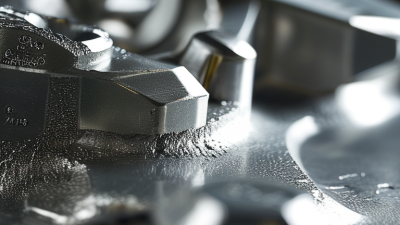
Decorative chrome plating is chosen mainly for appearance and moderate surface protection. It creates a bright, reflective finish on trim, fixtures, handles, and visible equipment parts. A thin chrome layer usually sits over nickel plating, which improves smoothness and corrosion resistance. Appearance matters here. Small scratches can become obvious under strong workshop lighting. Choose this option when visual quality matters more than extreme wear resistance.
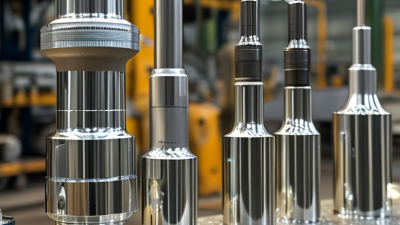
Hard chrome plating serves demanding mechanical applications. It forms a thicker, highly wear-resistant surface on shafts, hydraulic rods, molds, and sliding components. Engineers often specify it when friction, abrasion, or repeated contact could damage the base metal. Surface preparation remains critical. Poor cleaning can cause peeling, even when the coating itself is correctly applied. Final grinding may also be needed for tight dimensions.
Engineering chrome is a broader performance-focused choice. It may combine controlled thickness, low friction, corrosion resistance, and carefully measured tolerances. Some projects use hard chrome as the engineering solution, but the terms are not always identical. Check the operating load, temperature, mating material, and required surface roughness before deciding. A decorative finish on a moving shaft is usually a poor compromise. I have seen specifications focus on coating type while ignoring edge geometry and post-plating inspection. That oversight can create expensive rework. A better decision records both performance needs and measurement results.
Typical coating thickness and microhardness vary by specification and application. Decorative chrome is optimized for appearance, hard chrome for wear resistance, and engineering chrome for functional performance and dimensional control.
Note: The values shown are representative industry ranges expressed as typical midpoint values, not fixed limits. Actual requirements depend on the substrate, service environment, surface preparation, and applicable specification.
Choosing chrome plating starts with the part, not the finish. Decorative chrome suits visible components needing appearance and moderate wear resistance. Hard chrome fits shafts, molds, hydraulic rods, and sliding surfaces requiring hardness and repairability. Thin functional chrome can reduce friction, but its performance depends heavily on substrate preparation.
Match the coating to the base material. Steel usually offers predictable adhesion after cleaning and activation. Stainless steel, aluminum, and cast iron need tailored pretreatment. Otherwise, blistering or peeling may appear later. Check dimensional tolerances before plating. A hard layer can change a tight bore by measurable microns. Measure twice. Then study the environment: salt spray, humidity, abrasive dust, chemicals, heat, and trapped moisture all affect service life. A coating that performs well indoors may fail near a coastline. High-strength steel also requires careful process control because hydrogen-related cracking remains a serious concern.
Tips: Ask for a written process specification. It should state plating type, thickness range, hardness, surface finish, adhesion testing, and corrosion testing. Confirm how edges, holes, welds, and repaired areas will be treated. Do not choose by appearance alone. Field reviews often reveal teams over-specifying hardness while under-checking substrate fatigue. That is an easy mistake. A reasonable first choice can still be wrong. Test a sample part under real loads, because laboratory results rarely capture every scratch, impact, and cleaning cycle. No chart is perfect.
Choosing chrome plating in 2026 starts with the working environment, not the mirror finish. Decorative chrome commonly measures about 0.25–0.80 micrometres, while hard chrome often ranges from 20–500 micrometres. These figures align with ranges discussed in ISO 1456 and ISO 6158 for functional and decorative chromium coatings. Measure the base material first. A thin coating cannot hide deep machining marks.
Durability depends on load, friction, heat, and corrosion exposure. Hard chrome improves wear resistance, but it may crack under repeated impact. The U.S. National Association for Surface Finishing reports that coating performance depends heavily on substrate preparation and post-treatment. That detail is easy to underestimate. In field inspections, poor cleaning often causes earlier failure than insufficient thickness. Specify hardness, adhesion, porosity, and thickness together. One number is not enough.
Appearance requires a different judgment. Bright chrome reflects light sharply, while satin finishes hide fingerprints and minor scratches better. For outdoor parts, ask for corrosion testing, such as neutral salt spray exposure under ASTM B117. Test duration is not a direct prediction of service life, though. Maintenance needs also matter. Smooth surfaces usually clean faster, but damaged chrome should not be polished aggressively. Use a mild cleaner, soft cloth, and regular inspection around edges. I would also request a cross-section measurement from the plater. It costs more, but visual confidence can be misleading.
Start with the part’s job, not the brightest finish. Decorative chrome suits handles, trims, and visible hardware. It usually combines a smooth nickel layer with a thin chrome surface. Hard chrome serves shafts, molds, and sliding components. Its thicker deposit can improve wear resistance, release, and dimensional stability. The choice changes when the part faces salt spray, heat, or repeated friction.
Ask the plater to work from a controlled drawing. Specify coating thickness, surface preparation, adhesion testing, and acceptable dimensional change. ISO 1456 can guide electrodeposited nickel and chromium coatings, while ASTM B456 may support requirements for decorative electroplated finishes. Requirements vary by application. Confirm the current revision before production.
Budget decisions need more than a unit price. Hard chrome may cost more initially, yet it can reduce replacement work on high-wear parts. Decorative chrome may be economical for appearance-focused products, but polishing often drives the final cost. Request sample panels or trial parts. Inspect corners, bores, and edges, where coverage can become uneven. A cheap quote can be misleading. I have seen specifications overlook masking, rework, and inspection time. That mistake appears later as delay.
Use a qualified facility with traceable process records and test reports. Ask how bath chemistry, current density, and waste controls are monitored. Perfect results are not guaranteed. Surface defects, trapped oils, or poor cleaning can still defeat a careful specification. Recheck the design when plating thickness affects fits.