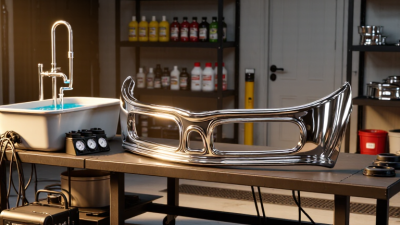
Global demand for chrome electroplating continues to grow across automotive, hardware, plumbing, and industrial equipment markets. Buyers now expect more than a bright, mirror-like surface. They need consistent thickness, strong adhesion, corrosion resistance, and dependable delivery.
Industry research supports this wider market movement. Grand View Research’s Metal Finishing Market report identifies automotive, aerospace, machinery, and electronics as major demand sectors. MarketsandMarkets also highlights electroplating as an important process for improving wear resistance and product life. These findings show why supplier selection requires technical judgment, not only price comparison.
This guide examines 10 chrome electroplating suppliers serving international buyers. It considers production capacity, plating systems, quality controls, material experience, export capability, and communication standards. Relevant evidence may include ISO 9001 certification, coating-thickness reports, salt-spray testing, and sample approval procedures. Small details matter. A test panel can reveal uneven brightness, edge burning, or poor coverage around threads.
Environmental performance also deserves careful attention. Reports from the U.S. Environmental Protection Agency emphasize strict controls for metal-finishing emissions and wastewater. Responsible suppliers should explain chemical management, worker protection, recycling practices, and compliance documentation. Buyers should verify these claims independently.
No supplier ranking is perfect. Applications differ. A bathroom fitting manufacturer may value appearance, while an automotive buyer may prioritize durability and cycle testing. This list offers a practical starting point, not a substitute for audits, samples, and written specifications. The strongest partnership begins with measurable requirements and honest technical discussion.

Chrome electroplating deposits a thin chromium layer onto a prepared surface using an electric current and a plating solution. The familiar bright finish is only part of the story. Chromium coatings can improve wear resistance, surface hardness, and corrosion protection, depending on coating type and application. Details matter: a small defect around a threaded hole can affect fit, while uneven thickness may cause premature wear.
The U.S. Geological Survey’s Mineral Commodity Summaries 2024 estimates global chromite mine production at about 46 million metric tons in 2023. This is an upstream materials figure, not a measure of plating output, but it highlights the scale of the chromium supply chain behind surface finishing. Buyers should ask suppliers about coating specifications, thickness measurement, adhesion testing, and how they control bath conditions between production runs. Requesting sample parts and test records can reveal more than a polished brochure. It takes time.
Supplier selection also involves process discipline and clear communication. A capable supplier should explain which coating suits the part’s operating environment, report inspection results, and flag design features that may complicate uniform coverage. Ask how defects are documented and corrected. Even experienced shops can encounter variation; the useful question is whether they detect it, explain it, and provide traceable records.
When evaluating chrome electroplating suppliers, global buyers should verify process capability before comparing prices. Decorative chrome and hard chrome require different bath controls, substrate preparation, thickness ranges, and testing methods. Request recent coating reports showing thickness, adhesion, hardness, and corrosion resistance. ASTM B117 salt-spray results or ISO 9227 reports should include test duration and failure criteria, not only a pass statement.
Quality certificates help, but they are not proof of daily consistency. The ISO Survey 2022 recorded more than 1.2 million ISO 9001 certificates worldwide, yet certificate numbers alone cannot reveal bath contamination or weak masking. Ask for process-control charts, calibration records, nonconformance logs, and corrective-action evidence. A useful factory audit should inspect racks, ventilation, rinsing stages, wastewater controls, and sample parts under realistic lighting. Small details matter.
Worker protection also deserves technical scrutiny. OSHA limits airborne hexavalent chromium exposure to 5 micrograms per cubic meter over an eight-hour workday. Buyers should request chemical-management records, exposure-monitoring results, and declarations for applicable substance restrictions. Confirm whether the supplier can provide trivalent or hexavalent processes legally in the destination market. Packaging tests should reflect ocean transport, humidity, abrasion, and stacked cartons.
Do not trust perfect samples alone. One impressive panel can hide unstable production. Ask for three consecutive production lots, with traceability from raw material to shipment. Review lead-time data across at least six months. A supplier promising every requirement immediately may deserve more questions, not fewer.
For international buyers, the best chrome electroplating supplier is not simply the one with the brightest sample. Ask how it controls coating thickness, surface preparation, adhesion, and batch consistency. A smooth part should feel even at its edges, where thin coverage can be easy to miss. Request inspection records and a trial run using your actual substrate and geometry. A polished sample can still mislead.
Demand is broad, but supplier capacity and quality vary. The International Organization of Motor Vehicle Manufacturers reported 93.5 million vehicles produced worldwide in 2023, underscoring the scale of manufacturing markets that use plated components. This figure does not measure chrome-plating demand directly, so buyers should avoid treating it as a forecast. Compare suppliers using relevant evidence: process capability, lead times, export packaging, and documented quality checks. Ask for coating-thickness measurements across several points, not just one convenient spot. Also confirm how the supplier handles rejected parts and production changes. Small gaps in communication can become expensive.
Distance adds friction. Clarify sample approval, shipping terms, and who pays for rework before placing a large order. A supplier may answer quickly, yet provide vague records. That deserves a second look. These checks are not perfect; audits take time, and test results describe only the samples examined. Still, clear specifications and traceable inspection data make international sourcing less dependent on promises.
Compare example coating thickness values in micrometres (µm) with their exact conversions to thousandths of an inch (mils). These are unit conversions—not supplier capabilities or universal coating specifications.
For global buyers, chrome plating quality starts with measurable controls, not a polished catalog. Ask suppliers to separate decorative chrome from hard chrome. Their process sheets should show coating thickness, base-metal preparation, current density, bath temperature, and inspection frequency. ASTM B456 provides a useful framework for electrodeposited coating requirements, including adhesion and corrosion testing. However, the standard does not guarantee consistent production by itself.
Certificates offer context, not certainty. The ISO Survey 2022 recorded 1,265,216 valid ISO 9001 certificates worldwide, showing how common quality systems have become. A certificate can still say little about a scratched shipment. Request recent audit scope, calibration records, nonconformance rates, and sample inspection reports. Independent thickness testing and adhesion checks are more convincing than a certificate image. Capacity needs proof. Compare tank dimensions, available line hours, maximum part weight, and monthly output for similar components. A supplier claiming large capacity should provide realistic lead times and documented production planning.
Worker protection also reflects process maturity. Occupational guidance sets an eight-hour exposure limit of 5 micrograms per cubic meter for hexavalent chromium, with an action level of 2.5 micrograms. Ask for recent exposure monitoring and ventilation records. Do not treat environmental paperwork as a substitute for technical evaluation. I would also test a small batch before approving full production. That step may feel slow, but it exposes rack marks, uneven edges, and color variation early. Some comparisons remain imperfect because suppliers measure quality differently. That uncertainty deserves written clarification.
Before placing an order, confirm what “chrome plating” means for the part. Ask the supplier to specify the base material, coating layers, target thickness, and finish. Decorative and hard-wear coatings serve different purposes. Request written specifications with measurable checks, such as thickness readings, adhesion tests, and appearance limits. Ask how samples are approved and whether production parts will follow the same process.
Tips: Request a recent sample and its inspection record. Compare the surface under bright, neutral light. Look for pits, dull patches, edge buildup, and uneven color. Ask who pays for repeat testing if results miss the agreed range. Confirm packaging details too. Thin parts can rub together during transit, even when the plating is sound.
Confirm lead time, minimum order quantity, payment milestones, and the process for handling defects. Ask whether the quote includes tooling, inspection, and export packing. Keep emails, drawings, and approved sample photos in one dated file. A polished sample can create false confidence. It proves little about batch consistency. One point still needs clarification: the supplier may use another process on complex shapes. Ask how recessed areas and sharp edges are controlled.
| No. | Evaluation Dimension | What to Confirm | Useful Evidence to Request | Why It Matters |
|---|---|---|---|---|
| 01 | Process and coating type | Confirm whether the requirement is decorative chromium plating or hard chromium plating, and whether the process uses trivalent or hexavalent chromium chemistry. | Written process description, proposed coating stack, and a clear statement of the chromium chemistry used. | These processes have different purposes, performance expectations, and regulatory considerations. Do not assume that “chrome plated” describes a single coating system. |
| 02 | Material and part compatibility | Confirm that the supplier has experience with the specified substrate, part geometry, and any required pretreatment. Ask how recesses, edges, holes, and complex shapes are handled. | Process assessment for the actual part drawing, substrate details, and sample or trial-part results where appropriate. | Adhesion and coating coverage depend on the substrate, preparation, and part geometry. Some areas may receive different coating thicknesses than exposed surfaces. |
| 03 | Specification and acceptance criteria | Agree on the coating specification, thickness requirements, appearance, permitted defects, test methods, and inspection sampling before production. | Approved purchase specification or drawing notes, inspection plan, and a signed sample approval if appearance is important. | Terms such as “bright,” “corrosion-resistant,” or “industrial chrome” can be interpreted differently unless measurable acceptance criteria are defined. |
| 04 | Quality management and traceability | Ask whether the supplier operates a documented quality system and how production lots, process records, inspections, and nonconforming parts are traced. | Relevant quality-system certificate with its scope and validity checked, sample inspection records, and a description of lot traceability. | A quality certificate can indicate a managed system, but it does not by itself prove that a particular coating or shipment meets your requirements. |
| 05 | Testing and inspection capability | Confirm how coating thickness, adhesion, appearance, and corrosion performance will be evaluated, and whether testing is performed in-house or by an outside laboratory. | Test methods, representative reports, equipment calibration information, and identification of any external testing laboratory. | Results are meaningful only when the test method, sample location, and acceptance limits are agreed and relevant to the part’s intended use. |
| 06 | Environmental and chemical compliance | Identify the destination-market requirements and confirm the chemical substances, process controls, and product declarations relevant to the ordered parts. | Product-specific compliance declarations and supporting test or material information where required by the buyer or applicable regulation. | Requirements vary by market and product category. A general statement of compliance should not be treated as proof for every part or jurisdiction. |
| 07 | Capacity and production readiness | Confirm that the supplier can handle the part size, hanging or racking requirements, order quantity, and required production schedule. | Written capacity and lead-time confirmation, process flow, and a production plan for the quoted order quantity. | Plating line dimensions, loading arrangements, and available production slots can limit what can be processed and when. |
| 08 | Packaging and transport protection | Agree on packaging that protects the finish from scratches, contact marks, moisture, and movement during storage and international transit. | Packaging specification, photos or samples of the proposed packing method, and agreement on labeling and handling instructions. | A satisfactory coating can still be damaged after processing if parts rub together or are exposed to unsuitable handling or storage conditions. |
| 09 | Commercial terms and delivery responsibilities | Check the quotation for tooling or setup charges, sample costs, minimum order quantities, payment terms, lead time, and the agreed delivery term. | Itemized quotation, written order acknowledgement, delivery schedule, and clearly stated shipping responsibilities. | Clear commercial terms reduce misunderstandings about what is included in the price and who is responsible for transport, insurance, and export arrangements. |
| 10 | Corrective action and ongoing support | Ask how coating defects, delivery issues, and claims are reported, investigated, contained, and resolved. | Written claim process, named customer-service contact, and examples of corrective-action documentation with confidential details removed. | A defined response process helps both parties identify causes and agree on practical containment and corrective actions if a shipment does not meet requirements. |
Buyer note: This table is a due-diligence checklist, not a ranking or verification of individual suppliers. Confirm all technical, regulatory, and commercial requirements against the actual part, destination market, and purchase specification.