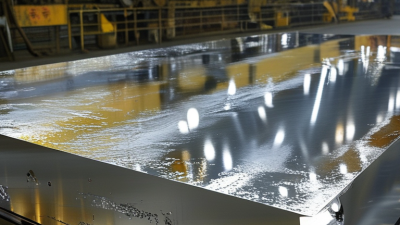
Choosing the best chemical chrome plating supplier in China requires more than comparing prices. The finish must survive handling, humidity, chemicals, and repeated friction. A bright surface can still hide weak adhesion. It can also fail after assembly.
MarketsandMarkets’ Electroplating Market report identifies automotive, electronics, and industrial equipment as major demand sectors. These industries increasingly expect consistent thickness, appearance, and traceable process control. The U.S. Environmental Protection Agency also treats chromium emissions and workplace controls as important compliance concerns. Suppliers should therefore explain their chemistry, ventilation systems, wastewater treatment, and documentation. Do not accept vague claims.
Frank Altmayer, an AESF Fellow and long-time electroplating educator, emphasizes a practical principle: “A controlled process is the foundation of consistent plating.” His point matters here. Ask for coating-thickness records, adhesion-test results, salt-spray data, and defect-rate history. Request samples using your actual base material, not a polished showroom coupon.
Experience matters.
A capable Chinese supplier should distinguish decorative chrome, functional chrome, trivalent systems, and other process options. It should also explain pretreatment, activation, rinsing, polishing, and final inspection. ISO 9001 certification can support confidence, but it does not replace independent testing. Reports from Grand View Research and MarketsandMarkets show continued demand for industrial surface finishing, yet market forecasts vary by definition and region. That uncertainty deserves attention.
No supplier is flawless. The better question is whether problems are measured, reported, and corrected quickly. This guide examines technical capability, environmental responsibility, export experience, and total cost. The cheapest quotation may become the most expensive decision.

Chemical chrome plating is a surface finishing process that deposits a chromium-based layer without relying only on conventional electrical current. The process usually includes degreasing, surface activation, catalytic treatment, chemical deposition, rinsing, and sealing. Each stage matters. Poor cleaning can cause peeling, cloudiness, or uneven color. Some suppliers also offer spray chrome systems, but these should not be confused with electroless plating.
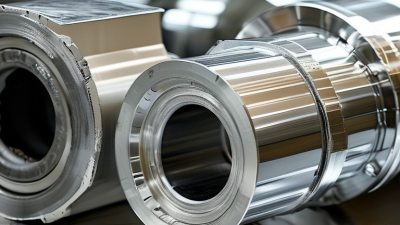
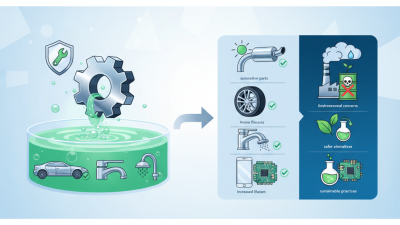
The applications are broad. Manufacturers use chemical chrome finishes on plastic automotive parts, decorative hardware, lighting components, bathroom fittings, and selected industrial surfaces. The finish can improve appearance, surface hardness, and resistance to moisture. However, performance depends on the substrate and coating thickness. A bright sample does not prove long-term quality. Testing does.
Chinese suppliers generally fall into three groups: chemical formulation producers, contract plating factories, and integrated suppliers offering chemicals, equipment, and technical support. The most suitable partner should provide trial plating, measurable adhesion results, thickness reports, safety data, and clear bath-maintenance guidance. Ask how they control temperature, pH, contamination, and wastewater handling. Visit the production site when possible. Photos are not enough.
Experience reveals practical weaknesses. Some suppliers explain the chemistry well but respond slowly during production problems. Others offer low prices but limited process records. A reliable supplier should support sample approval, batch traceability, operator training, and corrective action. Request parts made from your actual material, not a convenient substitute. This small step often exposes hidden risks.
What Is the Best Chemical Chrome Plating Supplier in China?
A strong supplier should control decorative chrome layers between 0.2 and 0.5 μm. This range creates a bright, reflective surface without adding unnecessary material. However, thickness alone does not prove coating quality. Substrate cleaning, activation, nickel preparation, and bath control strongly influence adhesion and appearance. Request cross-sectional measurements from several production areas, not one attractive sample. Small details matter.
ASTM B117 testing can help compare corrosion resistance after salt-spray exposure. It does not automatically define acceptance for every decorative chrome application. The purchase specification should state exposure hours, corrosion criteria, blister limits, and inspection methods. Ask for test records linked to the same substrate and plating process. Otherwise, the comparison may be misleading. Test it properly.
Experienced suppliers should explain how they monitor pH, temperature, current density, and surface defects. They should also provide traceable batch records and repeatable thickness data. A reliable factory will discuss limitations, including pores, edge effects, and color variation after extended testing. One practical weakness is often overlooked: a thin chrome layer may look perfect before testing but reveal weak pretreatment later. For that reason, audit samples, review ASTM B117 results, and inspect adhesion after exposure. The best supplier is not simply the lowest-cost option; it is the one that can consistently connect process control with verified performance.
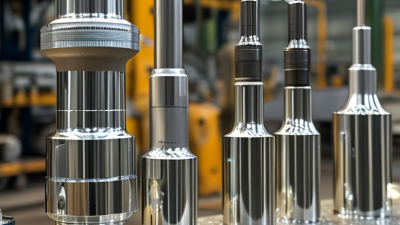
Choosing a hard chrome plating supplier in China requires more than comparing price. The key test is process control across 20–500 μm thickness and 800–1,000 HV hardness. ISO 6158:2018 identifies engineering chromium deposits for wear resistance, dimensional recovery, and corrosion protection. These applications demand measured performance, not attractive claims.
A capable supplier should provide hardness results using Vickers testing, with load and sampling locations clearly recorded. Thickness should be verified by X-ray fluorescence, magnetic measurement, or calibrated cross-section analysis. ASTM B177/B177M guidance also stresses deposit quality, adhesion, and dimensional accuracy. Ask for coating maps showing readings near edges, corners, and the center. Small details matter.
Industry assessments from Grand View Research and MarketsandMarkets describe electroplating as a process increasingly shaped by automation, environmental controls, and quality traceability. That trend is useful, but not decisive. A modern line can still produce uneven chrome if bath chemistry drifts or grinding removes too much material. Request batch records, surface-preparation procedures, post-plating grinding limits, and failure samples. Check the evidence yourself. Hardness near 1,000 HV may improve wear resistance, yet excessive thickness can increase cracking or dimensional risk. The best supplier is the one that explains these trade-offs honestly.
What Is the Best Chemical Chrome Plating Supplier in China?
Choosing a chemical chrome plating supplier requires more than comparing surface finish and delivery prices. A reliable supplier should provide current ISO 9001 and ISO 14001 certificates. Check the certificate scope, issuing body, site address, and expiration date. These details matter.
ISO 9001 indicates controlled quality processes, including inspections, corrective actions, and traceable production records. ISO 14001 shows a structured environmental management system. However, certification alone cannot prove daily discipline. Ask for recent audit findings and evidence of improvements. A supplier that openly discusses problems may be more trustworthy than one claiming perfection.
RoHS and REACH documentation should match your product, market, and material requirements. Request declarations, laboratory reports, and chemical inventory controls for plating solutions. Confirm whether testing covers restricted substances in the finished coating, not only incoming materials. Wastewater compliance deserves equal attention. Review discharge permits, treatment equipment, monitoring records, sludge handling, and emergency procedures. Visit the facility if possible. Look for labeled tanks, clear sampling points, and clean drainage areas. Small details reveal operating habits.
Records can be incomplete. That is a warning, not an automatic rejection.
Supplier evaluation should combine documents, technical discussions, sample testing, and an on-site review. Ask how thickness, adhesion, corrosion resistance, and appearance are measured. Require batch traceability and a defined response process for defects. A strong partner will explain limitations clearly, update compliance documents, and support customer audits without hesitation.
| Verification Dimension | Applicable Standard or Regulation | What the Requirement Covers | Documents and Evidence to Request | Objective Verification Method | Recommended Review Status |
|---|---|---|---|---|---|
| Quality Management | ISO 9001:2015 | A quality management system covering controlled processes, customer requirements, corrective action, internal audits, and continual improvement. | Valid certificate; certification body name; certificate number; certified legal entity; site address; scope of certification; expiry date. | Confirm the certificate directly through the certification body’s public database or written confirmation. Check that the certificate scope includes the relevant plating or surface-treatment site. | Verify before approval |
| Environmental Management | ISO 14001:2015 | An environmental management system for identifying environmental aspects, meeting compliance obligations, controlling operational impacts, and improving environmental performance. | Valid ISO 14001 certificate; environmental objectives; legal-compliance evaluation; emergency-response procedures; recent internal and external audit records. | Check certificate validity and site scope. Compare documented procedures with an on-site review of chemical storage, spill control, waste handling, and environmental monitoring. | Verify before approval |
| Restricted Substances | RoHS Directive 2011/65/EU and Delegated Directive (EU) 2015/863 | Restriction of specified substances in electrical and electronic equipment, including lead, mercury, cadmium, hexavalent chromium, PBB, PBDE, and four phthalates. | Material declarations; supplier declarations; representative test reports from an ISO/IEC 17025-accredited laboratory; plating chemistry and substrate specifications. | Review test methods, sample identification, report dates, detection limits, and product scope. Confirm that the evidence applies to the exact coating, substrate, and production process supplied. | Verify by product type |
| Chemical Substance Compliance | REACH Regulation (EC) No 1907/2006 | Registration, evaluation, authorisation, and restriction of chemical substances placed on or entering the European market, including communication of Substances of Very High Concern where applicable. | REACH compliance declaration; current Safety Data Sheets; substance composition or SVHC communication; evidence of upstream supplier communication; applicable authorisation information. | Check the latest Candidate List at the time of review and verify whether any SVHC exceeds the applicable 0.1% article threshold. Confirm that declarations cover the supplied coating and articles. | Verify current status |
| Wastewater Discharge | China GB 21900-2008, Electroplating Pollutant Discharge Standard | Pollutant discharge limits and monitoring requirements for electroplating wastewater, including regulated parameters such as total chromium, hexavalent chromium, nickel, copper, zinc, cyanide, pH, and suspended solids where applicable. | Pollutant discharge permit; recent third-party monitoring reports; wastewater-treatment operating records; sludge disposal records; emergency plans; local environmental inspection records. | Confirm that the permit covers the correct facility and discharge outlet. Compare laboratory results with the applicable limits and inspect segregation, treatment, online monitoring, and hazardous-sludge controls. | Verify site compliance |
| Process Capability | Customer specification and recognized test methods | Control of coating thickness, adhesion, appearance, corrosion resistance, dimensional tolerance, masking, and batch traceability for the specified chemical chrome plating process. | Control plan; process-flow diagram; inspection standards; thickness and adhesion records; corrosion-test reports; calibration certificates; sample approval records. | Audit production and inspection records using traceable batch samples. Confirm that test methods, acceptance criteria, equipment calibration, and sampling frequency match the purchase specification. | Verify by audit and samples |
| Supply-Chain Transparency | Contractual and customer-specific requirements | Traceability of raw materials, plating chemicals, subcontracted operations, production lots, nonconforming products, and corrective actions. | Approved-supplier list; chemical inventory; lot records; subcontractor disclosures; nonconformance reports; corrective-action reports; change-notification procedure. | Perform a document-to-floor traceability test from a finished part back to the substrate, chemicals, operators, inspection results, and wastewater records for the relevant production lot. | Verify before contract |
What Is the Best Chemical Chrome Plating Supplier in China?
Chinese suppliers can be ranked by control, delivery, price, and certification. Grand View Research estimated the global electroplating market near USD 18 billion in 2023. Asia-Pacific remained the leading region. This scale creates options, but quality varies sharply.
Rank one belongs to process-led suppliers. They use XRF thickness mapping, bath analysis, SPC charts, and documented corrective actions. Typical lead times range from 15 to 25 working days. Their prices are higher, yet traceability is stronger. ISO 9001 is expected. Automotive parts should also require IATF 16949, when applicable.
Rank two includes balanced suppliers. They often quote 10 to 18 working days and offer competitive pricing. Ask for coating-thickness records, adhesion results, and recent audit evidence. Rank three focuses mainly on low cost and short delivery. Lead times may fall below 10 working days, but process data can be incomplete. That is risky.
ASTM B117 salt-spray testing helps compare corrosion resistance, but it does not predict outdoor service life precisely. This limitation matters. A supplier should define substrate preparation, chrome thickness, bath chemistry, and inspection frequency in writing. Certification alone is not proof of control. The ranking is practical, not perfect. Actual performance depends on geometry, steel grade, drawings, and production volume. A small pilot order remains wiser than trusting a polished quotation.
This benchmark compares anonymous Chinese chemical chrome plating supplier profiles. Process control and certification coverage are scored on a 0–100 scale, while lead time is shown as calendar days and cost as a relative index where a higher score indicates better cost competitiveness.