What is Decorative Chrome Plating and How is it Used?
Decorative chrome plating is a vital process in various industries, enhancing both aesthetics and durability of products. According to a recent market analysis by Smith & Resnick, the decorative chrome plating industry has experienced a steady growth of 4.8% annually. This increase reflects the rising demand for components that combine elegance with resilience. Industry expert, Dr. Alan Hughes, emphasized, "Decorative chrome plating not only improves appearance but also increases longevity."
The use of decorative chrome plating spans multiple sectors, including automotive, home appliances, and consumer electronics. It adds a sleek, reflective finish that is visually appealing. However, the process is not without its challenges. Environmental concerns about chemicals used in plating have prompted calls for more sustainable practices. Industry leaders are being urged to reconsider methods that may harm ecosystems.
Despite its effective advantages, the efficiency of decorative chrome plating can be improved. Issues such as coating thickness and adhesion require continuous innovation. Addressing these factors can enhance product quality while minimizing waste. As the demand grows, the industry must adapt and embrace change for a sustainable future.

Definition of Decorative Chrome Plating and Its Characteristics
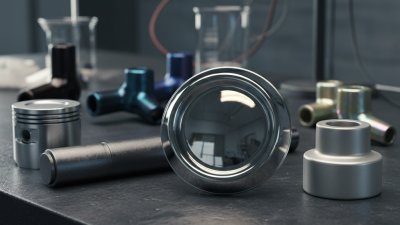
Decorative chrome plating is a popular finishing process that enhances the aesthetics of various surfaces. It provides a shiny, mirror-like finish, which can elevate the appearance of metal products. This process is widely used in automotive, household items, and hardware. The applying of chrome creates an eye-catching effect that draws attention.
One key characteristic of decorative chrome plating is its ability to resist corrosion. It creates a protective layer, shielding the underlying metal from oxidation. However, not all decorative chrome finishes are created equal. Some may wear out more quickly than others, leading to potential issues like peeling or fading. Observing these imperfections can help improve future plating projects. Proper surface preparation is also essential.
The thickness of the chrome layer plays a significant role in its longevity. Thicker coatings tend to last longer, yet they can be more costly. This can become a downside for budget-conscious projects. Analyzing these trade-offs is important for mindful decision-making. Decorative chrome plating can be visually stunning, but it comes with considerations that require thoughtful attention.
Common Applications of Decorative Chrome Plating in Various Industries
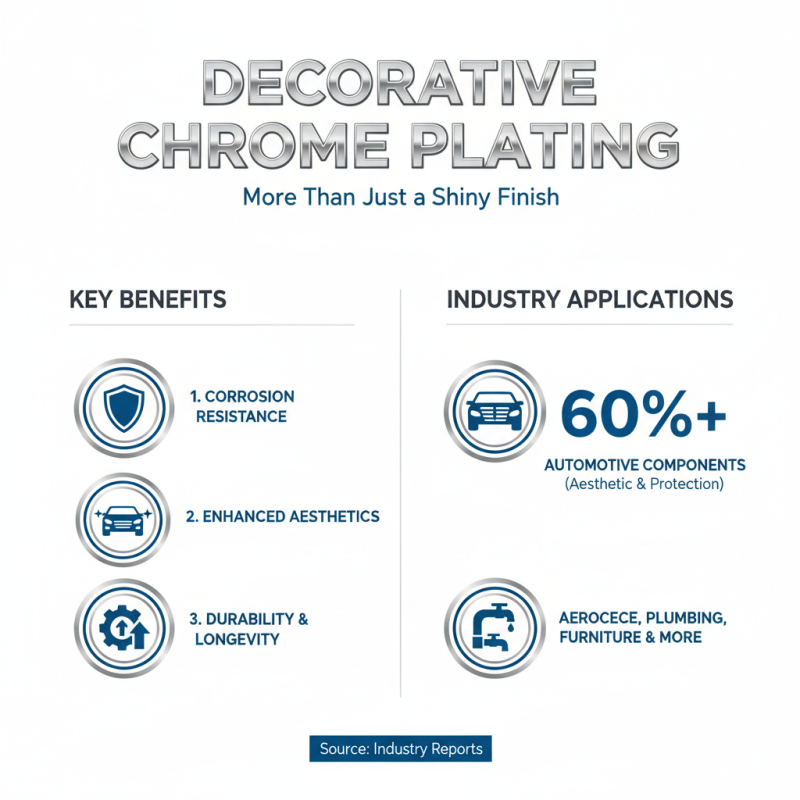
Decorative chrome plating is more than just a shiny finish. It's a crucial process used across various industries. In automotive manufacturing, chrome plating enhances aesthetic appeal and protects against corrosion. According to industry reports, over 60% of automotive components benefit from this coating. It provides a polished look that attracts buyers while ensuring durability.
In the home appliance sector, decorative chrome plating is prevalent. Kitchen fixtures, faucet handles, and even refrigerator trims exhibit this finish. A recent study indicated that appliances with chrome finishes can increase perceived value by 30%. However, there are concerns about environmental impacts during the plating process that need addressing.
Furniture design also leverages decorative chrome plating. Chairs, tables, and lighting fixtures often feature chrome accents. The lustrous finish elevates design but may require frequent maintenance to keep it pristine. Issues like tarnishing can arise, leading to dissatisfaction among consumers. As industries continue to grow, balancing aesthetics with sustainability remains a challenge.
The Process of Decorative Chrome Plating: Step-by-Step Overview
Decorative chrome plating is an intricate process that enhances the appearance of various objects. This technique provides a shiny, mirror-like finish, elevating the aesthetic appeal of everyday items. The multi-step process requires precision and care to achieve desired results.
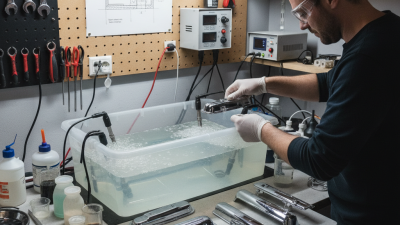
Initially, the substrate must be cleaned thoroughly. Any dirt or oils can ruin the finish. Following this, a base layer is often applied. This layer not only improves adhesion but also influences the final look. The actual chrome plating is done through electrolysis, where the metal object is immersed in a solution containing chromium ions.
After plating, the object is rinsed and dried. However, imperfections may occur during the process. Small bubbles can form, leading to uneven surfaces. Sometimes, dust or debris settles on the item despite the best efforts. It's important to inspect each piece closely and address any flaws. Over time, practice can lead to better results, but there will always be room for improvement in this artful trade.
What is Decorative Chrome Plating and How is it Used?
| Aspect |
Description |
| Definition |
Decorative chrome plating is a process that involves applying a thin layer of chromium to a substrate to enhance its appearance and resist corrosion. |
| Main Uses |
Commonly used in automotive parts, household fixtures, and electronic components to provide a shiny, reflective finish. |
| Benefits |
Improves aesthetic appeal, provides corrosion resistance, and enhances durability of the substrate. |
| Process Steps |
1. Surface preparation 2. Application of conductive layer 3. Chrome plating 4. Polishing and final inspection |
| Materials Used |
Steel, aluminum, plastic, and other metals that are suitable for plating. |
| Environmental Considerations |
The process can produce hazardous waste; therefore, proper waste management and compliance with environmental regulations are necessary. |
Advantages and Disadvantages of Using Decorative Chrome Plating
Decorative chrome plating is a process that adds visual appeal to various items. It creates a shiny, reflective surface that enhances aesthetics. Commonly used on automotive parts, furniture, and fixtures, it is favored for its sleek appearance. However, the advantages aren't all clear-cut.
One significant advantage is its durability. Chrome plating can resist corrosion and scratching, extending the life of the products. It makes items more appealing to potential buyers. Additionally, the surface is easy to clean. Just a quick wipe can restore its shine. Despite these benefits, there are drawbacks to consider.
The process can be quite costly. The initial investment might not justify the return, especially for small manufacturers. Environmental impacts from the chemicals used in plating are concerning. Some alternatives are less harmful but may not offer the same finish. Overall, while decorative chrome plating has benefits, it requires careful evaluation. Neglecting these factors can lead to regret later.
Maintenance and Care Tips for Decorative Chrome Plated Surfaces
Decorative chrome plating is a popular finish due to its shiny appearance and resistance to corrosion. However, maintaining these surfaces requires attention. Regular cleaning is essential to preserve their luster. Use a soft cloth and a mild cleaner. Harsh chemicals can damage the chrome layer and lead to dullness.
Dust and dirt can accumulate quickly. For best results, clean your chrome-plated items at least once a week. Reports indicate that improperly maintained surfaces can lose their shine within months. Many wear and tear signs are preventable through regular upkeep. Areas prone to fingerprints may need more frequent attention.
It’s not just cleaning that matters. Surface scratches can develop over time. These imperfections can be frustrating. Consider applying a wax coating for an additional protective layer. This solution can improve longevity and appearance. Monitoring the condition of chrome surfaces enables early intervention and prevents costly replacements. Regular maintenance keeps decorative chrome plating looking fresh and appealing.